Before You Import Turkish Marble: 7 Checks That Save Time and Cost
25.05.2026
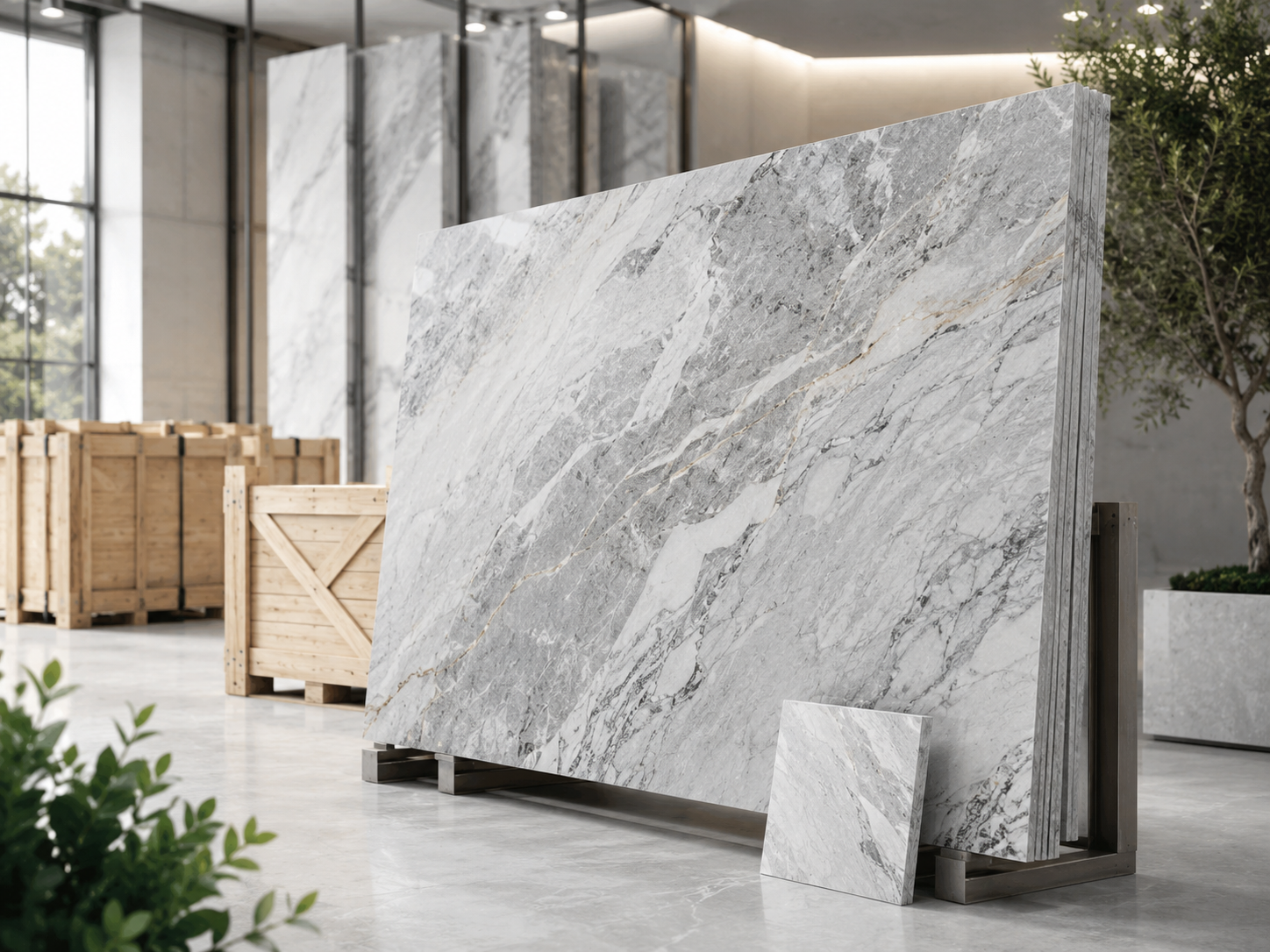
Before You Import Turkish Marble: 7 Checks That Save Time and Cost
Importing Turkish marble can be a smart decision for contractors, distributors, architects and project developers who need natural stone with strong visual character, reliable supply potential and competitive project value. Turkiye offers a wide range of marble varieties, from white and beige stones to grey, black, lilac, red and decorative selections.
But here is the honest part: importing marble is not only about choosing a beautiful slab from a photo.
A good marble order depends on selection, production details, documentation, packaging, logistics and communication. If these steps are not checked properly, a project can lose time, money and patience faster than a cracked tile on a bad installation day.
Before you place an order, these seven checks can help make the process clearer, safer and more efficient.
1. Check the Material Selection Carefully
The first step is not price. The first step is material selection.
Turkish marble is a natural product, so every block, slab and tile may show different tones, veins, movements and surface characteristics. This is not a defect. This is the nature of real stone. But natural variation must be controlled according to the project.
Before importing, buyers should review real slab photos, current bundle images or production samples instead of relying only on catalog visuals. A catalog photo may show the general character of the stone, but it cannot always represent the exact material that will be shipped.
For large projects, tone consistency matters. A hotel lobby floor, bathroom wall or villa staircase needs visual harmony. If the selected marble pieces vary too much, the final result may look unplanned.
Important points to review include:
Background tone should be checked under realistic lighting, because white, beige and grey marble can look different under daylight, warehouse light and interior project lighting.
Vein density should match the design expectation, especially for stones with strong movement such as lilac, black, red or striped marble varieties.
Slab layout should be considered before cutting, because vein direction can affect the final appearance of walls, counters, stairs and flooring applications.
Tile grouping should be requested for larger surfaces, since natural shade differences can become visible after installation if the material is packed randomly.
The stone may be beautiful, but the wrong selection can still create a poor result. Marble does not only need admiration; it needs planning.
2. Check the Finish Before Production
Surface finish changes the entire mood of marble. The same stone can look bright, calm, rustic or modern depending on how it is processed.
A polished finish gives marble a glossy and reflective surface. It is often preferred for hotel interiors, wall panels, luxury bathrooms, reception areas and decorative applications. A honed finish creates a softer, matte and more natural appearance. It can be ideal for modern interiors, bathroom floors and calm architectural spaces.
Other finish options such as brushed, leather, tumbled, sandblasted or antique surfaces may be suitable for special project requirements. However, not every finish is suitable for every stone or every application.
Before importing Turkish marble, the buyer should confirm the desired finish clearly. “Grey marble tiles” is not enough. “Honed grey marble tiles, 2 cm thickness, selected tone group, for bathroom floor use” is a much safer instruction.
Important finish checks include:
Polish quality should be reviewed with close-up photos or videos, because weak polishing can make the marble look tired even if the stone itself is beautiful.
Honed surfaces should be checked for consistency, since uneven matte finishing may create patchy visual effects after installation.
Slip resistance should be considered for wet areas and outdoor-related applications, because a beautiful surface can still be a wrong choice if it becomes unsafe in use.
Finish compatibility should be confirmed with the application area, especially for bathrooms, pool surroundings, stairs, commercial floors and high-traffic spaces.
A finish is not a small technical detail. It is the face of the stone.
3. Check Dimensions, Thickness and Tolerances
This is where many import problems begin.
A buyer may focus on color and price but forget to define thickness, size tolerance, edge details and calibration expectations. Then the material arrives, and suddenly the installer becomes a philosopher of regret.
For slabs, thickness must be confirmed clearly. For tiles, size accuracy and calibration are important. For cut-to-size pieces, every measurement should match the project drawings. Stairs, risers, skirting, thresholds and wall panels require extra attention because small measurement mistakes can delay installation.
Before production starts, buyers should confirm:
Exact dimensions should be written clearly for slabs, tiles and cut-to-size pieces so the supplier does not make assumptions based on standard production habits.
Thickness tolerance should be discussed in advance, especially for flooring, wall cladding and furniture applications where installation precision matters.
Edge details should be defined for countertops, vanity tops, stairs and visible panels, because the wrong edge profile can change both function and appearance.
Quantity calculation should include waste allowance, because natural stone projects usually need extra material for cutting, selection and future replacement needs.
For project-based orders, technical drawings are gold. A simple drawing can prevent a long chain of expensive misunderstandings.
4. Check Packaging Standards
Packaging is not glamorous, but it can save the entire order.
Marble is strong after installation, but during transportation it needs serious protection. Long-distance shipping, forklift handling, port movement and container vibration can damage poorly packed materials.
For slabs, strong wooden bundles are essential. For tiles and cut-to-size pieces, secure wooden crates with separators, foam protection and proper labeling are important. The goal is simple: the material should arrive in the same condition it left the factory.
Packaging checks should include:
Slab bundles should be strong enough for international shipment, because weak bundle construction can create cracks, breakage or movement inside the container.
Tiles should be packed with proper separators and protective material, especially polished marble pieces that can scratch or chip during transport.
Cut-to-size pieces should be labeled according to project areas, because organized labeling can save serious time during installation.
Photos of packed material should be requested before loading, since packaging quality is easier to fix before shipment than after the container arrives.
A beautiful marble packed badly is not a luxury order. It is a lottery ticket with a forklift involved.
5. Check Export Documents and Product Details
Importing marble requires more than material approval. Documentation must also be clear.
Before shipment, the buyer should confirm invoice details, packing list, HS code, certificate requirements, origin documents and any market-specific import needs. Missing or incorrect paperwork can delay customs clearance and create unnecessary storage costs.
This step may feel boring, but boring paperwork is better than exciting customs problems.
Important document checks include:
Commercial invoice details should match the order, including product name, quantity, value, buyer information and supplier information.
Packing list should clearly show crate or bundle details, because customs brokers and warehouse teams need accurate information for handling and clearance.
Country of origin documentation should be confirmed if required by the destination market or buyer’s internal purchasing process.
Product descriptions should be consistent across documents, since mismatched names can create confusion during import procedures.
For buyers reviewing Turkish stone options and product categories before ordering, the Turkish marble products page can be used as a starting point to compare different marble types and natural stone selections.
6. Check Supplier Communication and Production Updates
A reliable supplier does not disappear after receiving payment.
Communication is one of the most important parts of marble import. Buyers should expect clear responses, real material updates, production photos, packing photos and loading information. Natural stone orders involve many steps, and silence creates risk.
A professional supplier should explain what is available, what can be produced, what needs time and what may vary naturally. If every question gets only “yes, no problem,” that is not always a good sign. In marble trade, too much “no problem” sometimes becomes the first problem.
Good communication should include:
Clear confirmation of the selected material before production, so both buyer and supplier agree on the exact stone character, tone and format.
Production updates during cutting and finishing, especially for project-based orders where timing and accuracy are important.
Inspection photos or videos before packing, because visual confirmation helps reduce disputes after shipment.
Loading photos after container preparation, since they provide useful proof of packaging, bundle position and shipment readiness.
Trust is built in details. Not in slogans, not in shiny brochures, and definitely not in blurry warehouse photos sent at midnight.
7. Check Total Cost, Not Only Unit Price
The cheapest marble offer is not always the lowest-cost option.
When importing Turkish marble, buyers should calculate the full picture: stone price, finishing, packaging, inland transport, port charges, freight, insurance, customs costs, taxes, unloading, installation waste and possible delay costs.
A low unit price can become expensive if the material is poorly selected, badly packed or delayed. A slightly higher price from a reliable supplier may save time, reduce breakage and protect the project schedule.
Total cost checks should include:
Packaging cost should be included in the comparison, because strong export packaging may increase the initial price but reduce damage risk significantly.
Freight and shipping terms should be understood clearly, since EXW, FOB, CFR or CIF offers can create very different cost responsibilities for the buyer.
Waste allowance should be calculated realistically, especially for natural stone projects with vein selection, cutting needs and future replacement concerns.
Delay costs should be considered for project-based orders, because late material delivery can affect installation teams, site schedules and client expectations.
A cheap container that arrives late, damaged or visually inconsistent is not cheap. It is just expensive in disguise.
Final Import Mindset
Importing Turkish marble can be a strong business decision when the process is handled carefully. Turkiye offers wide stone variety, experienced production capacity and many attractive natural stone options for international projects.
But a successful order depends on asking the right questions before shipment, not after problems appear.
Before importing, check the material. Check the finish. Check dimensions. Check packaging. Check documents. Check communication. Check total cost.
That is the real difference between simply buying marble and managing a professional natural stone order.
Turkish marble has beauty, strength and global demand. With the right checks, it can also arrive on time, match the project and protect the buyer’s budget. Natural stone already took thousands of years to form; the least we can do is not ruin the order with lazy planning.