Olive Maroon Marble
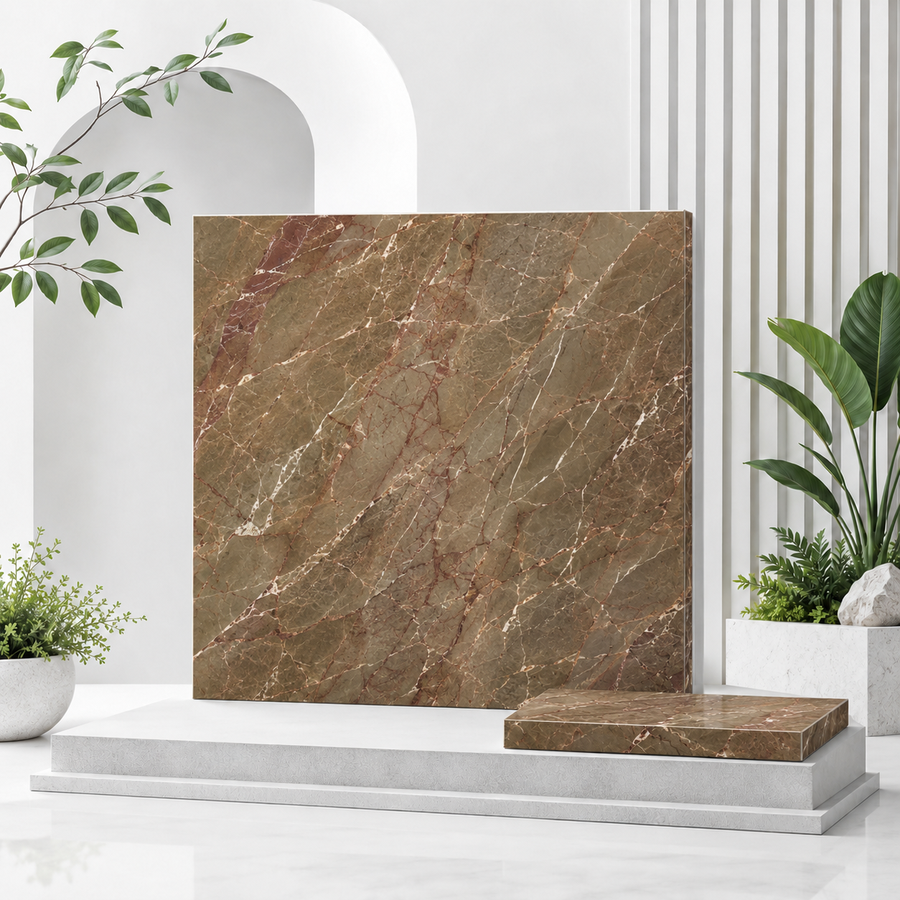
Olive Maroon Marble
Olive Maroon Marble is a distinctive Turkish marble with a deep, warm and expressive character. It is not the kind of stone that quietly disappears into the background. This marble has personality. With its maroon, burgundy, earthy red and olive-toned movements, it creates a strong visual identity for interiors that need richness, depth and a natural sense of luxury. For projects where plain beige or white marble feels too predictable, Olive Maroon Marble offers a more artistic and memorable surface.
The beauty of Olive Maroon Marble comes from its layered color structure. Its base may include maroon, wine-red, brownish, olive, cream or greyish transitions depending on the block and selection. These tones move across the surface in natural waves, cloudy patterns and vein formations. The result is a marble that feels warm, dramatic and refined at the same time. It carries the mood of old stone buildings, boutique hotels, private villas and elegant interiors where material character matters.
In architecture and interior design, color is never just color. It changes how a space feels. Light stones can create openness and calmness, but darker and warmer stones bring intimacy, weight and emotion. Olive Maroon Marble is especially powerful in this sense. It can make a lobby feel more prestigious, a bathroom feel more luxurious, a feature wall feel more artistic and a commercial space feel more exclusive. Used correctly, it does not just decorate the project; it gives the project a voice.
One of the strongest usage areas for Olive Maroon Marble is wall cladding. A feature wall made with this marble can become the visual center of an interior. In hotel lobbies, restaurant interiors, luxury residences, office reception areas and boutique commercial spaces, its maroon and olive tones can create a sophisticated atmosphere. The natural movement of the stone adds depth, while its darker color palette gives the surface a serious and elegant presence. Some stones whisper. This one speaks with a low, confident tone.
Olive Maroon Marble can also be used in flooring applications, especially where the design aims for warmth and distinction. In large floors, it should be selected and applied carefully to maintain visual balance. Since the stone has a strong color character, it works beautifully when paired with calmer surrounding materials. Cream walls, soft lighting, natural wood, bronze details, black metal or warm neutral furniture can help the marble stand out without overwhelming the space. Good design is not about putting loud materials everywhere; it is about knowing when to let one material lead.
Bathrooms are another suitable area for Olive Maroon Marble, particularly in luxury residential and hospitality projects. When used on bathroom walls, vanity areas or selected floor sections, it creates a spa-like but more dramatic environment. Unlike plain white stones, this marble brings a sense of depth and warmth. It can be paired with matte black fixtures for a modern look, brushed brass for a richer atmosphere or cream ceramic elements for a softer balance. The result can be bold without becoming heavy.
For vanity tops, decorative counters, table tops and custom furniture pieces, Olive Maroon Marble can offer a boutique and exclusive look. Its color movement makes every piece unique, which is valuable for designers who want natural surfaces with character. In restaurants, cafes, hotel bars and private interiors, this marble can be used to create memorable focal points. A counter made from Olive Maroon Marble does not need much decoration around it. The stone already carries the drama.
In commercial design, Olive Maroon Marble can be a very effective material when used with restraint. Luxury retail stores, boutique hotels, restaurants, galleries and high-end office interiors often need materials that create identity. This marble can support that purpose because it looks natural, premium and uncommon. It avoids the coldness of some grey stones and the predictability of standard beige surfaces. It has warmth, movement and a slightly mysterious tone. In other words, it has stage presence.
Surface finish plays an important role in the final appearance of Olive Maroon Marble. A polished finish brings out the depth of the maroon and olive tones more strongly. It gives the stone a glossy, elegant and luxurious surface, making it suitable for feature walls, decorative panels, bathrooms, counters and refined interior applications. A honed finish creates a softer, matte and more natural look. This can be preferred when the design needs a quieter, more contemporary feeling. Depending on the project, the selected finish should support both the function and the desired atmosphere.
Lighting is especially important with darker and warmer marbles. Olive Maroon Marble responds beautifully to warm lighting. Under the right light, its red, brown, olive and cream details become richer and more dimensional. Poor lighting, on the other hand, can flatten the stone and hide its character. This is why designers should consider lighting plans before finalizing the application. Natural stone and light are old friends; when they cooperate, the result is hard to beat.
This marble can be supplied in slabs, tiles and cut-to-size pieces depending on the project requirements. Slabs are ideal for wall panels, counters, table tops, vanity tops, fireplaces and custom design details. Tiles can be used for floors, walls and bathroom applications. Cut-to-size production may be preferred for stairs, risers, skirting, thresholds, decorative panels or project-specific architectural elements. The right format depends on the scale, budget and design intention of the project.
Slab selection is one of the most important stages when working with Olive Maroon Marble. Because the stone has strong natural movement, each slab may show different vein density, tone distribution and pattern direction. This is part of its beauty, but it also requires careful planning. For feature walls or large visible surfaces, slab photos and layout planning are highly recommended. If a project needs a calmer look, more balanced slabs should be selected. If the goal is drama, stronger veined slabs may be preferred. Marble gives options, but it expects decisions.
For flooring projects, tone grouping and installation layout should be handled carefully. Since Olive Maroon Marble has a rich color palette, random installation without selection may create a visually crowded result. A good installer or supplier should group similar tones and plan the layout before application. This is where craftsmanship becomes visible. The stone itself is beautiful, but careless installation can turn beauty into noise. Natural stone is generous, but not endlessly forgiving.
Olive Maroon Marble pairs well with many design materials. With cream and beige tones, it creates warmth and elegance. With dark wood, it becomes rich and classic. With black metal, it gains a modern and dramatic edge. With brass or bronze details, it feels more luxurious and decorative. With soft grey surfaces, it becomes balanced and architectural. This flexibility makes it suitable for both traditional and contemporary design concepts.
In villa projects, Olive Maroon Marble can be used as an accent material rather than covering every surface. A fireplace wall, entrance floor, bathroom feature wall, staircase detail or dining table top can be enough to introduce its character into the space. In hotel projects, it can be used in lobbies, bar counters, reception desks, corridor details and suite bathrooms. In restaurants, it can help create a warm, memorable and premium atmosphere. The trick is simple: let the stone breathe. A strong marble needs room around it.
From a natural stone perspective, Olive Maroon Marble offers an alternative to more common marble colors. White, beige and grey stones are always useful, but some projects need a deeper emotional tone. Olive Maroon Marble answers that need with its warm dramatic palette. It feels artistic without becoming chaotic, luxurious without becoming artificial and traditional without looking outdated. That is not an easy balance to find.
Maintenance should also be considered, as with all natural marble. Proper sealing, regular cleaning with suitable products and protection from harsh chemicals are important for long-term performance. Marble is durable, but it is still a natural material. It should be treated with care. Acidic cleaners, abrasive materials and careless use can damage the surface. This is not a weakness; it is simply the nature of real stone. Even kings needed armor.
For professional projects and export orders, reliable production and packaging are essential. Olive Maroon Marble should be inspected for surface quality, cracks, tone harmony, thickness and finish before shipment. Slabs must be packed securely in strong bundles, while tiles and cut-to-size pieces should be placed in wooden crates with proper protection. A beautiful marble deserves careful handling from quarry to project site. Otherwise, the journey can become more dramatic than the stone itself, and not in a good way.
For buyers who want to source unique Turkish marble selections, working with an experienced Turkish marble supplier can make the process clearer and more dependable. Material selection, slab inspection, production details, packaging and shipment planning all affect the final result. In natural stone trade, trust is built through details, not slogans.
Olive Maroon Marble is a strong choice for projects that need warmth, depth and a memorable natural stone character. It can be used in wall cladding, floors, bathrooms, counters, fireplaces, hotel interiors, villas, restaurants and custom design pieces. Its maroon and olive-toned movement gives spaces a rich visual identity that standard stones cannot always provide.
In a world where many surfaces try to look natural, Olive Maroon Marble carries the confidence of the real thing. It has color, movement, age, weight and presence. It is not for every project, and that is exactly what makes it valuable. Some stones are chosen to match the room. Olive Maroon Marble is chosen when the room needs a soul.