How to Choose Turkish Marble for Commercial Projects
25.05.2026
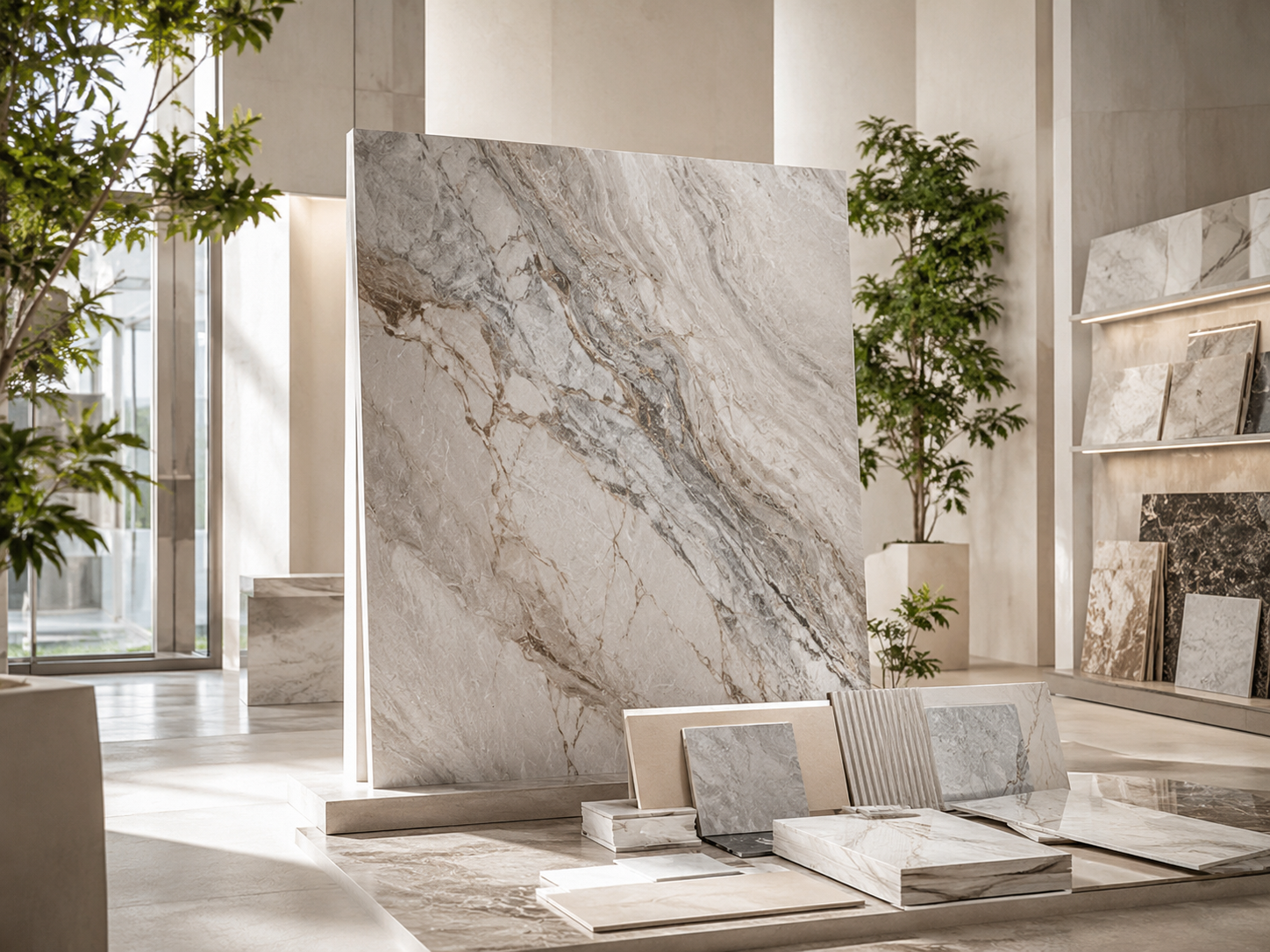
How to Choose Turkish Marble for Commercial Projects
Choosing Turkish marble for commercial projects is different from choosing marble for a private home. In a residence, the decision may focus mostly on beauty, taste and atmosphere. In a commercial space, the stone must do more. It has to support traffic, brand identity, maintenance planning, installation speed, budget control and long-term visual performance.
A hotel lobby, office reception, restaurant floor, retail store wall or commercial bathroom cannot be treated like a decorative corner. These areas are used every day. People walk, wait, spill, clean, move furniture, drag luggage and touch surfaces constantly. So the marble selection should be elegant, yes, but also realistic. Marble is noble, but it is not magic. Choose badly and the project will remind you every morning.
Start with the Function of the Space
The first question should not be “Which marble looks beautiful?” The first question should be “Where will this marble be used?”
A commercial project may include different zones, and each zone needs a different stone logic. Lobby floors need strength and visual continuity. Reception desks need a strong first impression. Bathroom walls need elegance and moisture-aware planning. Restaurant floors need maintenance discipline. Retail walls need brand character.
For example, a polished white marble wall can look excellent behind a reception desk, but the same polished surface may not be the best choice for a high-traffic wet floor. A dramatic marble slab can create a memorable hotel entrance, but using the same stone across every wall may make the interior feel visually heavy.
Good commercial design does not use marble everywhere just because it can. It uses marble where it creates value.
Match the Marble Color to the Brand Atmosphere
Commercial interiors are not only spaces; they are brand environments. The marble should match the message of the business.
White Turkish marble is suitable for brands that want a clean, bright, elegant and premium image. It works well in clinics, luxury offices, hotel bathrooms, beauty centers, boutiques and modern reception areas where clarity and freshness are important.
Beige Turkish marble is a strong option for hotels, restaurants, corporate lobbies and hospitality spaces where warmth, comfort and timeless luxury are needed. It creates a welcoming feeling without becoming visually aggressive.
Grey Turkish marble is ideal for modern offices, showrooms, restaurants, retail stores and commercial bathrooms where the design needs a calm, architectural and contemporary identity.
Black Turkish marble can be powerful in reception desks, feature walls, bar counters, luxury retail interiors and dramatic commercial spaces, but it should be used carefully because too much dark marble can make the space feel heavy.
Decorative Turkish marble with strong veins or rich colors can work beautifully as a focal point in boutique hotels, restaurants, luxury stores and selected wall panels where the brand needs a memorable visual signature.
A commercial space should not look like a marble showroom unless the business actually sells marble. The stone must serve the identity, not hijack it.
Consider Foot Traffic Before Choosing the Finish
Surface finish is one of the most important decisions in commercial marble projects. The same marble can perform and look very different depending on the finish.
A polished finish gives the stone a glossy and luxurious appearance. It is excellent for wall panels, reception desks, feature walls, vanity tops and low-risk decorative areas where reflection and visual impact are desired.
A honed finish creates a matte and softer surface, making it useful for modern commercial floors, bathrooms and interiors where the design should feel elegant but not too reflective.
A brushed or leather finish can add texture and a more tactile surface feeling, especially for counters, wall panels and selected commercial details where touch and visual depth matter.
A sandblasted or antique finish may be preferred in areas where a more textured, less slippery and more natural surface is required, depending on the project concept.
For high-traffic floors, finish selection should be handled with care. A beautiful polished surface may look impressive on day one, but commercial use can be unforgiving. Shoes, dust, cleaning products and constant movement are not gentle critics. They review the material daily.
Choose Marble According to Application Area
Different commercial areas require different marble choices. A single material strategy for the whole project may look simple on paper, but it can create problems on site.
Lobby floors should use marble selections with controlled tone movement, suitable thickness and a finish that can handle daily traffic while still supporting a premium first impression.
Reception desks can use more decorative slabs because they are visual focal points, and a stronger veined or darker marble can help create brand identity without affecting floor performance.
Feature walls can carry more expressive Turkish marble varieties since walls are less exposed to wear and allow the natural pattern of slabs to be appreciated clearly.
Commercial bathrooms need marble that works well with moisture, cleaning routines and lighting, especially on walls, vanity areas and selected floor surfaces.
Restaurant interiors should balance beauty with cleaning practicality because food, drinks, oils and frequent maintenance can quickly expose poor material choices.
Retail spaces can use marble strategically on entrance zones, display walls, counters and branded focal areas where natural stone adds value to customer perception.
Office interiors usually benefit from calmer marble selections such as beige, grey or soft white stones that create professionalism without distracting from the working environment.
These choices should be made before production, not after installation starts. Marble planning done late is usually just damage control wearing a nice shirt.
Think About Lighting Before Approving the Stone
Lighting changes marble more than many buyers expect. A grey marble may look soft in daylight but darker under warm interior lights. A beige marble may feel creamy under warm lighting and pale under cold lighting. A white marble may look clean in a showroom but too sharp under harsh LEDs.
For commercial projects, this matters because lighting is usually designed to influence customer behavior and brand perception. A restaurant may use warm lighting. A clinic may use bright white light. A hotel lobby may combine daylight, wall washers and decorative fixtures.
Before approving Turkish marble, buyers should check:
Real slab photos under different lighting conditions so the final material does not surprise the designer, contractor or client after installation.
How the marble reacts to wall lighting, because vertical surfaces can show veins, shadows and polish reflections more strongly than expected.
Whether the selected finish creates too much glare, especially in lobbies, corridors, offices and retail interiors with strong artificial lighting.
How the stone works with furniture and metal details, because brass, black metal, chrome and wood can change the perceived warmth of the marble.
Lighting is not decoration after the stone. It is part of the stone’s final appearance. Ignore it and even good marble can look like it woke up on the wrong side of the quarry.
Plan Slab Selection and Layout Early
Commercial projects usually have large visible surfaces. That means slab selection and layout planning are critical.
For walls, reception desks, counters and large panels, slab movement should be reviewed before cutting. Strong veins should flow intentionally. Linear stones should be aligned properly. Beige and grey stones should be tone-grouped. White marble should be checked for shade consistency.
A careless layout can make expensive marble look cheap. A planned layout can make a simple stone look custom and high-end.
For commercial work, layout planning should include:
Slab numbering and approval so every visible piece has a clear place in the final design before cutting begins.
Vein direction planning for walls, counters and floors where movement can either support the architecture or visually break the surface.
Tone grouping for large floors and corridors because commercial interiors often use wide areas where shade differences can become obvious.
Extra quantity allowance for cutting, selection, site breakage and future replacement, especially in hotels, offices and retail areas with long-term maintenance needs.
This step saves time, money and arguments. And frankly, every construction project already has enough arguments; no need to invite marble chaos too.
Check Thickness and Technical Requirements
Commercial projects often require more technical discipline than residential projects. Thickness, tolerance, edge details, backing systems, installation methods and substrate conditions should be confirmed before production.
A wall panel project may need different preparation than a floor project. A reception desk may require reinforced slab planning. A staircase needs accurate measurements. A bathroom needs correct slope, sealing and installation details.
Important technical checks include:
Thickness selection should match the application area because floors, wall panels, counters and stairs may require different material specifications.
Edge profiles should be confirmed for visible commercial details such as reception counters, vanity tops, stair treads and display units.
Installation system should be planned in advance, especially for large-format wall cladding, heavy slabs and areas where mechanical fixing may be needed.
Maintenance access and replacement logic should be considered because commercial spaces may need future repairs without disrupting the entire business.
The stone is only one part of the system. Installation, substrate and detailing decide whether it performs well.
Balance Beauty with Maintenance
Commercial spaces need maintenance-friendly design. This does not mean avoiding marble. It means selecting and using it intelligently.
Marble is a natural stone and requires proper cleaning, sealing and care. Harsh chemicals, acidic cleaners, abrasive pads and careless maintenance can damage the surface. In a commercial project, the cleaning team must know how to care for the stone.
Maintenance planning should include:
Choosing the right finish for the traffic level so the surface remains visually acceptable after daily use and regular cleaning.
Using suitable cleaning products because acidic or aggressive chemicals can damage marble surfaces and reduce polish quality over time.
Planning entrance mats and dust control in high-traffic areas because dirt and grit can act like sandpaper on commercial marble floors.
Applying professional sealing where needed, especially in bathrooms, restaurants, counters and areas exposed to water, oils or staining risks.
A marble project does not end when the stone is installed. That is just the wedding. Maintenance is the marriage.
Compare Total Project Value, Not Only Stone Price
For commercial projects, the cheapest marble is not always the most economical choice. A lower price can become expensive if the stone has poor selection, weak finishing, inconsistent thickness, bad packaging or delayed delivery.
The real cost includes material, production, selection, waste allowance, packaging, freight, installation time, maintenance and possible replacement.
When comparing Turkish marble offers, buyers should evaluate:
Material consistency because large commercial projects need visual harmony across multiple areas, not just a few attractive sample pieces.
Production quality because poor calibration, weak polishing or inaccurate cutting can increase installation time and site problems.
Supplier communication because commercial schedules depend on clear updates, realistic production timing and proper documentation.
Packaging and logistics because damaged material can delay installation and increase costs far beyond the original price difference.
For buyers reviewing Turkish natural stone options for commercial applications, the Turkish marble products category can help compare different marble colors, styles and project-suitable selections.
Choose a Supplier Who Understands Projects
Commercial marble supply is not only about selling stone. It requires understanding timelines, drawings, specifications, packaging, approvals and communication.
A reliable supplier should provide real material photos, slab videos, production details, finish confirmation, packaging images and shipment updates. If the project needs cut-to-size production, the supplier should follow measurements carefully and ask questions when something looks unclear.
A good supplier does not say “yes” to everything blindly. A good supplier notices risks early. In marble trade, a well-timed warning is sometimes more valuable than a discount.
Practical Checklist Before Ordering Turkish Marble
Before placing a commercial marble order, review these points carefully:
Confirm the application area for every marble item so floors, walls, counters, bathrooms and decorative panels are not treated with the same technical assumptions.
Approve real slabs, tiles or bundle photos because natural marble variation must be checked before production and shipment.
Define finish, thickness, edge details and dimensions clearly so the supplier produces according to the project requirement rather than general expectation.
Request layout planning for visible areas because walls, reception desks, counters and large floors need visual control before cutting starts.
Check packaging standards and shipment preparation because commercial projects cannot afford delays caused by preventable breakage.
Clarify cleaning and maintenance expectations because the long-term appearance of marble depends on how the surface is used and cared for.
Calculate total project cost instead of only unit price because poor quality, damaged material or late delivery can cost more than the initial saving.
A Smarter Way to Use Turkish Marble in Commercial Spaces
Turkish marble can bring strong value to commercial projects when it is selected with both design and function in mind. White marble can create brightness and luxury. Beige marble can create warmth and timeless comfort. Grey marble can create modern balance. Black and decorative marbles can create powerful focal points.
The right choice depends on the space, traffic level, lighting, brand identity, installation method and maintenance plan.
Commercial interiors need materials that look good not only on opening day, but also after months and years of use. Turkish marble can do that beautifully when selection, production and application are handled with discipline.
A successful commercial marble project is not built by choosing the most attractive stone photo. It is built by choosing the right stone for the right place, with the right finish, right planning and right supplier. That is where natural beauty becomes professional value.