White, Beige or Grey? Matching Turkish Marble to Interior Style
25.05.2026
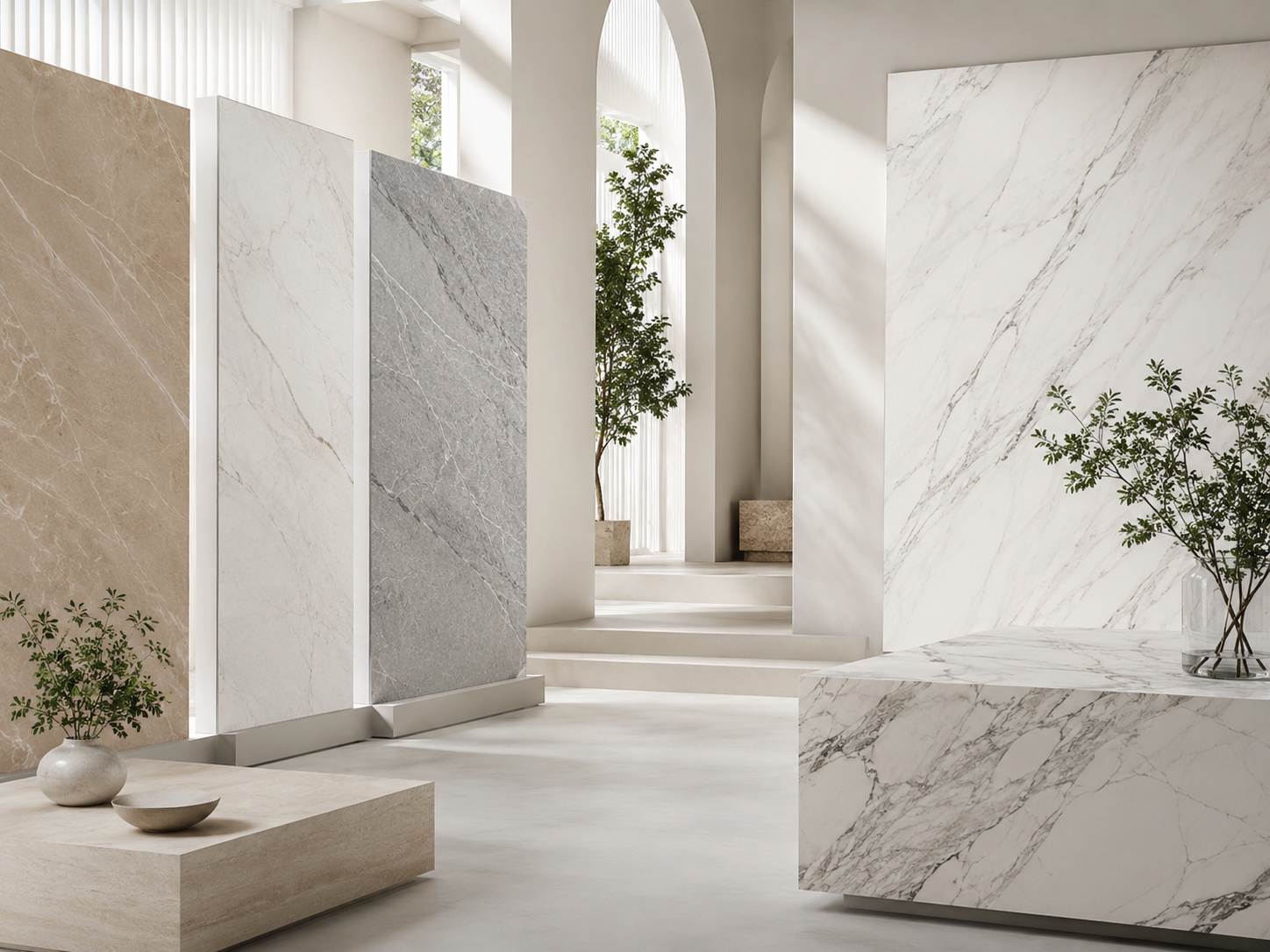
White, Beige or Grey? Matching Turkish Marble to Interior Style
Choosing the right Turkish marble is not only about finding a beautiful stone. It is about matching color, movement, finish and atmosphere with the interior style of the project. White, beige and grey marble can all look luxurious, but they do not create the same feeling. Each one speaks a different design language.
White marble brings light and clarity. Beige marble brings warmth and comfort. Grey marble brings balance and modern structure. The right choice depends on the space, the design concept, the lighting, the furniture and even the market where the project is located.
For international projects in the United States, United Arab Emirates, Qatar, Kuwait, Saudi Arabia, Israel, Australia, Malta and the United Kingdom, Turkish marble offers a wide natural stone portfolio for different architectural tastes. A villa in Dubai, a hotel in London, a residence in Doha or a commercial project in New York may all use Turkish marble, but not always in the same color or style.
Why Color Choice Matters in Marble Design
Marble is a natural material with depth, movement and personality. Unlike artificial surfaces, it does not look exactly the same from one piece to another. This is part of its beauty, but it also means color selection must be handled carefully.
A white marble floor can make a space look larger and brighter. A beige marble wall can make an interior feel warmer and more welcoming. A grey marble bathroom can create a modern and calm atmosphere. The wrong color, however, can fight with the design. And when marble fights with the room, nobody wins. The room usually just looks expensive and confused.
Before choosing between white, beige or grey marble, designers and buyers should consider:
Lighting conditions should be reviewed carefully because the same marble can look brighter under natural daylight, warmer under soft interior lighting or cooler under LED lighting.
Furniture and metal details should be considered before final selection because wood, brass, chrome, black metal and glass can completely change how the marble color feels inside the space.
Project type should guide the decision because a luxury hotel lobby, a private villa bathroom, a restaurant floor and a commercial reception area do not need the same visual atmosphere.
Market expectations should also matter because marble preferences can change between regions such as the USA, UAE, Qatar, Kuwait, Saudi Arabia, Israel, Australia, Malta and the UK.
White Turkish Marble for Bright and Elegant Interiors
White marble is one of the strongest choices for interiors that need brightness, freshness and timeless elegance. Turkish white marble can create a clean architectural base while still offering natural vein movement and surface depth.
It is especially suitable for luxury bathrooms, hotel interiors, villa floors, wall cladding, kitchen backsplashes, vanity tops and feature walls. White marble helps reflect light, which makes it useful in smaller interiors or projects where a more spacious feeling is desired.
In the United States and the United Kingdom, white marble is often preferred for luxury kitchens, bathrooms, residential interiors and boutique commercial spaces. In the United Arab Emirates, Qatar, Kuwait and Saudi Arabia, white Turkish marble can support bright villa interiors, hotel bathrooms and high-end lobby designs. In Australia, white marble works well in modern homes where clean lines and natural materials are used together. In Malta and Israel, it can be used in both contemporary interiors and Mediterranean-inspired spaces.
White Turkish marble matches well with:
Matte black fixtures and metal frames because they create strong contrast against the white surface and make the interior feel more modern and architectural.
Brass or gold details because warm metallic accents soften the brightness of white marble and add a more luxurious atmosphere to bathrooms, kitchens and hotel interiors.
Light wood furniture because natural wood prevents the space from becoming too cold and creates a softer, more comfortable balance.
Soft grey fabrics and wall colors because they connect naturally with grey veins in white marble and create a calm, refined interior palette.
White marble is a strong choice when the project needs clarity, but it should not be selected blindly. Too much white, poor lighting and weak material selection can make a space feel cold. Good design keeps the brightness, but adds warmth through texture, lighting and surrounding materials.
Beige Turkish Marble for Warm and Timeless Spaces
Beige marble has a different kind of luxury. It is not as sharp as white marble and not as cool as grey marble. Turkish beige marble brings warmth, comfort and long-term elegance to interiors.
This makes it especially useful for hotels, villas, residential floors, bathrooms, staircases, wall cladding, corridors and commercial spaces where visual comfort matters. Beige marble can cover large surfaces without tiring the eye, which is why it remains a classic choice in architecture.
In the UAE, Qatar, Kuwait and Saudi Arabia, beige Turkish marble is often a natural fit because it works beautifully with warm lighting, luxury villa interiors and hospitality projects. In the United States and United Kingdom, beige marble can be used in elegant homes, hotel bathrooms and commercial interiors that need a softer, more welcoming surface. In Malta, beige tones can match Mediterranean architectural character very well. In Israel and Australia, beige marble can support both residential and outdoor-connected interior concepts.
Beige Turkish marble works well with:
Walnut and oak wood because these materials strengthen the natural warmth of beige marble and create interiors that feel comfortable, rich and balanced.
Bronze and brass details because warm metal finishes increase the luxury feeling without creating harsh contrast or visual tension.
Cream, ivory and taupe textiles because these tones help build a soft layered palette around beige marble and keep the interior calm.
Black metal accents because dark details can give beige marble a more modern and defined architectural character.
Beige marble is not boring when it is used correctly. Bad design makes beige boring. Good design turns it into a quiet foundation for luxury. It is the stone version of a calm professional: no drama, no panic, just reliable elegance.
For buyers comparing warm, light and neutral Turkish stone options, the Turkish marble products category can be a useful starting point to explore different marble selections for flooring, bathrooms, walls and project-based applications.
Grey Turkish Marble for Modern and Balanced Interiors
Grey marble has become one of the strongest choices in contemporary interior design. Turkish grey marble offers a modern surface character without becoming too loud or too decorative. It can feel calm, architectural and refined when selected properly.
Grey marble is suitable for bathrooms, hotel lobbies, office interiors, villa floors, kitchen islands, fireplace surrounds, wall panels and commercial spaces. It gives structure to the design and works well with both warm and cool materials.
In the United States and United Kingdom, grey marble is often used in modern residential projects, restaurants, bathrooms and office interiors. In the United Arab Emirates, Qatar, Kuwait and Saudi Arabia, grey Turkish marble can create a cooler, more contemporary alternative to traditional beige tones. In Australia, it fits well with modern homes, open spaces and natural material palettes. In Israel and Malta, grey marble can be used for boutique interiors, bathrooms and refined commercial projects.
Grey Turkish marble pairs well with:
White walls and ceilings because they keep the space bright while allowing the grey marble to create depth and visual structure.
Matte black fixtures because black details sharpen the modern character of grey marble and create a clean architectural contrast.
Warm wood furniture because timber balances the cool tone of grey stone and prevents the interior from feeling too industrial.
Brass, bronze or champagne metal accents because warm metallic finishes can soften grey marble and give it a more luxurious atmosphere.
Glass and mirror details because reflective materials increase light and help grey marble feel more open, especially in bathrooms and hotel interiors.
Grey marble is a smart choice when the project needs balance. It is less formal than black marble, less bright than white marble and more modern than beige marble. That middle position makes it extremely useful. Grey is not indecisive; grey is diplomatic.
Matching Marble Color to Interior Style
Different interior styles need different stone moods. The color should support the design, not fight it.
Minimalist interiors usually work best with white or soft grey Turkish marble because these colors support clean lines, open space and calm surfaces without adding unnecessary visual weight.
Classic luxury interiors often match beautifully with beige marble because warm tones, decorative lighting, wood furniture and bronze details create a more traditional sense of elegance.
Modern hotel interiors can use grey marble for a refined architectural identity, especially in lobbies, corridors, bathrooms and reception areas where durability and visual control are both important.
Mediterranean-inspired interiors can benefit from beige and white marble because these tones support natural light, warm textures, stone walls and relaxed coastal design language.
Boutique commercial spaces may prefer white marble with strong veins or grey marble with deeper movement because these stones help create a more memorable brand atmosphere.
Luxury villa bathrooms can use all three colors depending on the mood: white for brightness, beige for warmth and grey for calm modern sophistication.
The best marble choice is not always the most dramatic one. Sometimes the right stone is the one that makes the room feel complete without demanding applause.
How Export Markets Influence Marble Preferences
Turkish marble is exported to many international markets, and each market may have different design expectations.
The United States often demands a wide range of Turkish marble, including white, grey, beige and decorative stones for residential, commercial and hospitality projects. The United Arab Emirates and Qatar frequently lean toward premium-looking materials for luxury villas, hotels and large interiors. Kuwait and Saudi Arabia often appreciate warm beige tones as well as bright stones for elegant interiors. Israel can favor practical, durable and visually balanced marble options for residential and commercial projects. Australia often uses marble in modern homes, bathrooms, kitchens and landscape-connected interiors. Malta can work beautifully with beige and white tones that match Mediterranean design. The United Kingdom usually values refined, carefully selected materials for luxury homes, restaurants, hotels and retail interiors.
This is why a supplier should not only understand marble. The supplier should understand where the marble is going and how it will be used. A project in London does not always need the same stone mood as a villa in Doha. A bathroom in Sydney may need a different surface logic than a hotel lobby in Dubai.
Practical Checks Before Choosing White, Beige or Grey Marble
Before finalizing the marble color, buyers should review a few practical details.
Ask for real slab or tile photos instead of relying only on catalog images because natural marble varies, and the actual shipment may show different tone, vein and movement details.
Review the material under similar lighting conditions because marble color can change significantly between warehouse light, daylight and warm interior lighting.
Confirm the surface finish before production because polished, honed, brushed or leather finishes can completely change the character of white, beige or grey marble.
Plan the layout before cutting when using veined marble because vein direction, tone grouping and panel arrangement can make the difference between a premium result and a careless installation.
Consider long-term maintenance because lighter marbles, darker veins, wet areas and high-traffic floors may require different care expectations depending on the application.
White, Beige or Grey: Which One Should You Choose?
Choose white Turkish marble when the project needs brightness, freshness, elegance and a clean luxury feeling. It is especially strong for bathrooms, kitchens, hotel interiors, wall panels and spaces where light is important.
Choose beige Turkish marble when the project needs warmth, softness, comfort and timeless architectural value. It is especially suitable for villas, hotel floors, lobbies, staircases, bathrooms and large interior surfaces.
Choose grey Turkish marble when the project needs modern structure, calm sophistication and flexible design balance. It works beautifully in bathrooms, offices, commercial spaces, hotel interiors, kitchens and contemporary residential projects.
There is no single correct answer. The right marble depends on the project’s style, light, scale, location and emotional tone. Marble is not just a material decision. It is an atmosphere decision.
Turkish marble offers enough variety to support many different interiors across the USA, UAE, Qatar, Kuwait, Saudi Arabia, Israel, Australia, Malta and the UK. Whether the project needs clean white elegance, warm beige comfort or modern grey balance, the right stone can turn a surface into a lasting architectural statement.